


How Do You Move an ULT Freezer? A Step-by-Step Guide on Frozen Lab Moving Standard Workflow
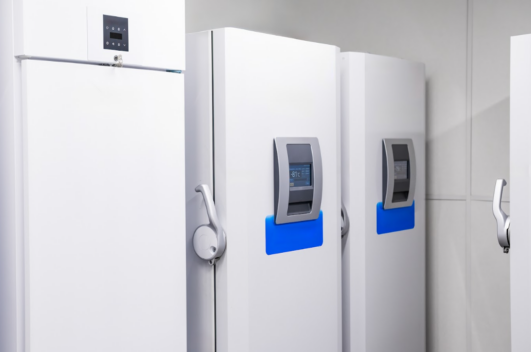
A ULT freezer isn't furniture. It's a life-support system for research that can't be reordered, cell lines, biobank specimens and reagents years in the making. Treating the freezer and its contents as one single continuous cold chain, from the moment you unplug it to the moment it's running again at destination, is of the utmost importance.
You don't get a second attempt if it goes wrong. That's why the frozen lab moving workflow below exists: a sequence built around one goal, keeping temperature within tolerance at every single handoff, whether the freezer travels full, empty or somewhere in between.
What Is the Standard Workflow for Moving a ULT Freezer?
The workflow runs in five phases: pre-move temperature stabilization, a decision on sample transfer versus in-unit transport, plug-in loading, monitored transit and placement with re-stabilization at destination. A fully loaded −80°C ULT freezer typically holds a safe internal temperature for four to six hours after power loss, which is exactly why every phase of this workflow is built around minimizing or eliminating, any gap in power.
Phase 1: Pre-move stabilization. Two weeks out, not the morning of. This is when you audit sample inventory, confirm the freezer's model-specific hold-time curve (manufacturers including Thermo Fisher, Eppendorf and Panasonic publish these) and decide your transport method.
Phase 2: Sample transfer or in-unit transport. Either the samples move inside the running unit or they're pulled and packed separately. More on that decision below.
Phase 3: Plug-in load. The freezer is loaded onto the truck without ever losing power, a continuous-power transfer, not a defrost-and-restart.
Phase 4: Monitored transit. Temperature is logged continuously, with alarms set to flag any drift before it becomes a problem.
Phase 5: Placement and re-stabilization. At destination, the unit is leveled, reconnected and given time to re-equilibrate before anyone treats it as back in service.
When Should Samples Travel Separately from the Freezer?
Samples should travel inside a powered, plugged-in freezer whenever continuous power can be guaranteed for the full transit window. They should be pulled and packed separately when the move is long-haul, cross-border or involves irreplaceable material with zero excursion tolerance. This is a sample-by-sample decision, not a blanket freezer-by-freezer one.
Short, local transit under continuous power favors keeping samples in the owned unit as it travels, plugged in, avoiding a second point of handling. The alternative is an Armstrong-provided rental freezer: samples are transferred from the client's origin unit into the rental at pickup and only in that scenario is a temperature-stable unit staged and waiting at the destination. Which path fits depends on whether the client's own freezer is making the trip or samples are moving into a provided unit instead.
The wrong answer is deciding this the morning of the move. Your relocation partner should be asking about sample criticality during the survey phase, not the loading dock.
Why Continuous Power and Monitoring Are Non-Negotiable
Power interruption is the single biggest risk in any ULT freezer relocation and the tolerance window is shorter than most facility managers assume. That's why plug-in transport exists: a trailer fitted with an onboard generator keeps the freezer's compressor running the entire trip, so there's no clock counting down against you.
Monitoring needs to run in parallel and it needs redundancy. A single sensor near the door can read fine while a different zone inside the unit is already warming, which is why cold-chain monitoring is built around multiple sensor points, not one. An alarm alone isn't protection. "We had an alarm" isn't the same as "we had continuous power and someone watching the data in real time."
What Documentation Protects Chain of Custody During a Lab Move?
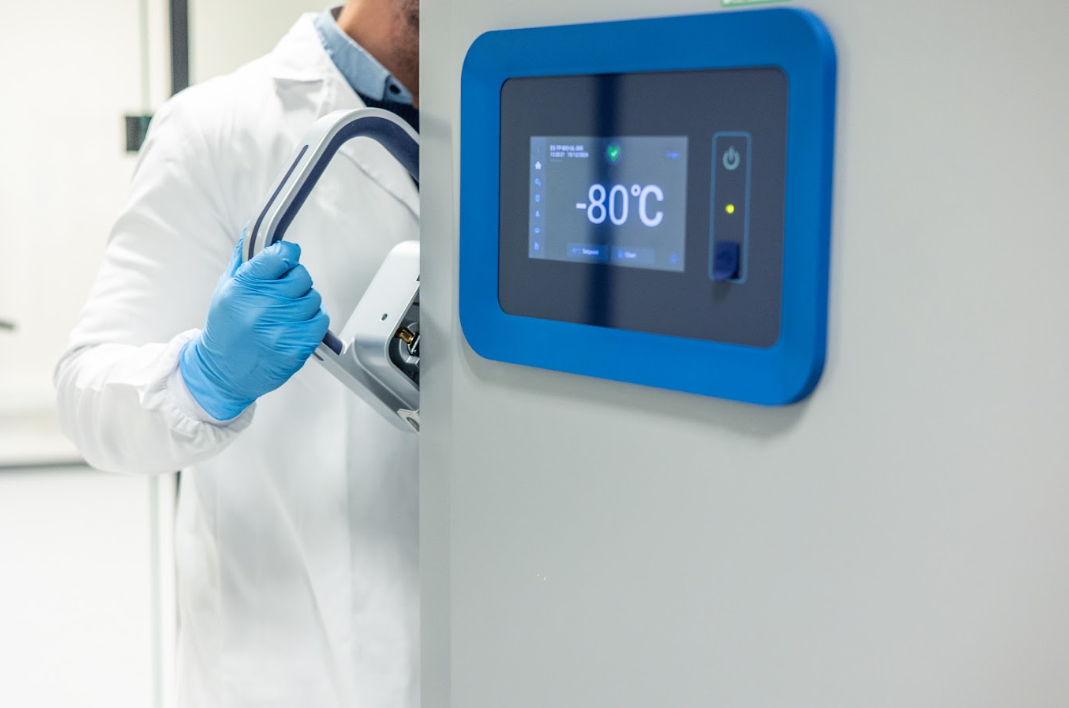
Chain-of-custody documentation for a lab move needs to answer three questions at any point in transit: where the freezer or sample is right now, what its temperature has been the entire time and who has had physical control of it. Without that record, you can't prove sample integrity to a funder, a regulator or your own institutional review board after the fact.
In practice, that means a continuous temperature log covering the full transit window, a signed record of custody transfer at each handoff (loading dock, border crossing, destination) and the shipping paperwork required under IATA and DOT hazardous materials regulations. Anyone shipping Category B biological substances, dry ice or exempt specimens is required to complete recognized shipper training before those materials move.
If your relocation partner can't produce a temperature log and a documented custody trail at the end of the move, you don't actually have proof the cold chain held, you have an assumption.
Cross-Border Considerations for Frozen Lab Moving
A frozen lab move that crosses the Canada to US border adds regulatory layers on top of the temperature-control problem and both need to be solved together, not sequentially. Dry ice shipped by air falls under IATA's Dangerous Goods Regulations, which cap quantities at 200 kilograms per package under Packing Instruction 954 and require packaging that vents carbon dioxide rather than sealing it in.
Biological substances add their own layer of packaging, labeling and customs paperwork and requirements can differ depending on where the shipment originates. None of this is a reason to avoid moving a frozen lab across the border. It's a reason to build customs clearance and dangerous-goods documentation into the relocation timeline from day one, alongside the cold-chain plan, rather than treating them as separate problems solved by separate people.
How Do You Choose a Qualified Cryogenic Freezer Lab Mover?
A qualified cryogenic freezer lab mover should be able to show you three things before you sign off: a fleet actually equipped to keep freezers powered and running during transit, a documented chain-of-custody process and experience with the specific regulatory paperwork your move requires. A moving truck with a liftgate is not the same thing as a cold-chain logistics provider.
Ask what happens if a border inspection takes four hours longer than planned and whether your samples are still under power the entire time. Ask how temperature is logged, not just monitored. Logged means you get the record afterward, not just an alarm at the time. And ask whether the crew has actually handled dangerous-goods paperwork before or whether that's being figured out on your move. Armstrong Scientific Transport runs plug-in trailers built specifically to keep ULT freezers, cryogenic equipment and samples powered throughout transit, with documented load checks and chain-of-custody records built into every relocation.
Getting Your Frozen Lab Move Right the First Time
Frozen lab moving comes down to one discipline, repeated at every step: never let the cold chain break and never lose the paper trail proving it didn't. The workflow, stabilizing, deciding on in-unit versus separate transfer, loading without a power gap, monitoring continuously and re-stabilizing at destination works because it removes the guesswork at the exact moments where guesswork costs you a sample bank.
Get the sample-by-sample transfer decision right, keep power continuous, document custody at every handoff and build cross-border paperwork into the timeline from the start. That's the difference between a lab move you forget about and one you're still explaining to a funding body a year later.
Planning a lab relocation with ULT freezers, cryogenic storage or temperature-sensitive samples? Contact Armstrong Scientific Transport about a pre-move survey. The earlier your cold-chain plan is built, the fewer surprises you'll have on move day.
FAQ
1. Can ULT freezers be moved full?
Yes, when the freezer can stay plugged in and powered for the entire transit. This is exactly what plug-in transport trailers are built for. If continuous power can't be guaranteed for the full route, samples are typically pulled and transferred separately rather than risking a full unit losing power mid-transit.
2. How are samples protected?
Samples are protected through continuous power to the freezer during transit, redundant temperature sensors placed at multiple points in the unit and continuous temperature logging rather than spot checks. For higher-risk or long-haul moves, samples may instead be transferred into a validated shipper or a second running freezer at destination.
3. What if power fails in transit?
A fully loaded −80°C ULT freezer can typically hold a safe temperature for four to six hours after power loss, though this varies by model and load level. Plug-in transport with an onboard generator is designed specifically to prevent that clock from ever starting, backed by continuous monitoring that flags any temperature drift immediately.
4. How long can a ULT freezer stay unplugged during a move?
There's no universal number. It depends on the freezer's thermal mass, how full it is and the ambient temperature around it, so the manufacturer's published hold-time curve for your specific model is the only reliable reference. Because that window can be short, most frozen lab moves are planned to avoid an unplugged gap entirely rather than racing the clock.
5. Do cross-border lab moves need special customs paperwork?
Yes, dry ice and biological substances are both regulated under IATA and DOT rules, with specific packaging, labeling and quantity requirements that differ from a standard shipment. Customs and dangerous-goods paperwork should be planned alongside the cold-chain logistics from the start, not worked out at the border.
6. What's the difference between in-unit transport and sample transfer?
In-unit transport means the samples stay inside the freezer while it's moved fully powered, avoiding an extra handling step. Sample transfer means pulling the samples out and packing them separately on dry ice or into a second freezer at destination, which adds a step but is often the safer call for long-haul, cross-border or zero-tolerance moves.