


How to Choose a Laboratory Moving Company: A 10-Point Checklist for Research Institutions
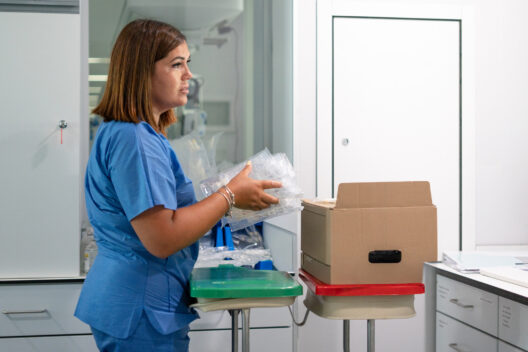
If you were just told your lab is relocating and you have no idea where to start, you're not alone, and you're not behind. Choosing the right partner is a compliance decision as much as a logistics one and most research administrators are never trained for it. This checklist exists so you can walk into vendor conversations asking the questions that actually separate a capable partner from a moving truck with a quote.
We wrote this from the equipment side, not the sales side. When evaluating a laboratory moving company, every point below reflects what compliance officers, procurement teams and principal investigators need to verify before a single freezer gets unplugged. Use it as a working document and bring it to your first vendor call.
The One Selection Criterion That Matters Most
Documented compliance is the single most important factor in choosing a laboratory moving company. A mover that can produce current Transportation of Dangerous Goods (TDG) training certificates, IATA dangerous-goods classification competency and Good Distribution Practice (GDP) documentation has already solved the problems a generalist mover hasn't encountered yet.
Price comparisons feel objective, so it's tempting to lead with them. But a quote says nothing about whether a crew is trained to handle Category A infectious substances or knows why a -80°C freezer can't lose power for more than a few minutes. Transport Canada's TDG regulations require anyone who handles, packages or transports dangerous goods to hold a valid training certificate, renewed annually for air shipments and every three years for ground shipments. Ask for the certificate before you ask for the price.
Why a Laboratory Moving Company Is Different From a General Mover
General movers are built for furniture and boxes. Lab relocations involve regulated substances, calibrated instruments and chain-of-custody obligations that a standard household or office mover has never been asked about. Here are questions a generalist mover typically cannot answer and why they matter:
- "What's your TDG certificate number and when was it last renewed?" A generalist may not know what TDG stands for.
- "Can your trailer keep a plugged-in ULT freezer at temperature for a 12-hour haul?" Most standard trailers have no onboard power supply built for this.
- "Are you a CAUBO-recognized vendor for our institution's procurement process?" Academic procurement compliance isn't a household-moving concept.
- "What's your protocol if a Category A biological substance shipment is delayed at a border crossing?" Few movers outside scientific transport have ever dealt with this scenario.
- "Who signs off on chain-of-custody at each handoff point and is that logged?" General movers rarely have a formal sign-off process at all.
If a prospective mover hesitates on more than one of these, that's a data point, not a dealbreaker on its own, but worth noting before you move forward.
How Do You Choose a Lab Moving Company? The 10-Point Checklist Before You Sign
Use these ten criteria in order. Each one includes what good looks like and the red flag that should make you ask a follow-up question before signing anything.
1. TDG and Dangerous-Goods Certification
A qualified laboratory moving company can produce current TDG training certificates for every crew member handling regulated materials, along with proof of classification on file for the goods being shipped. Transport Canada requires shippers to keep proof-of-classification records, such as test reports, lab reports or an equivalent document for five years from the shipment date. Good movers keep this documentation ready to show, not buried in a filing system somewhere.
Red flag: A sales rep who describes TDG training as "something our drivers have covered" without naming certificate numbers, renewal dates or the specific dangerous-goods classes their team is certified for.
2. Cold-Chain and ULT Freezer Capability
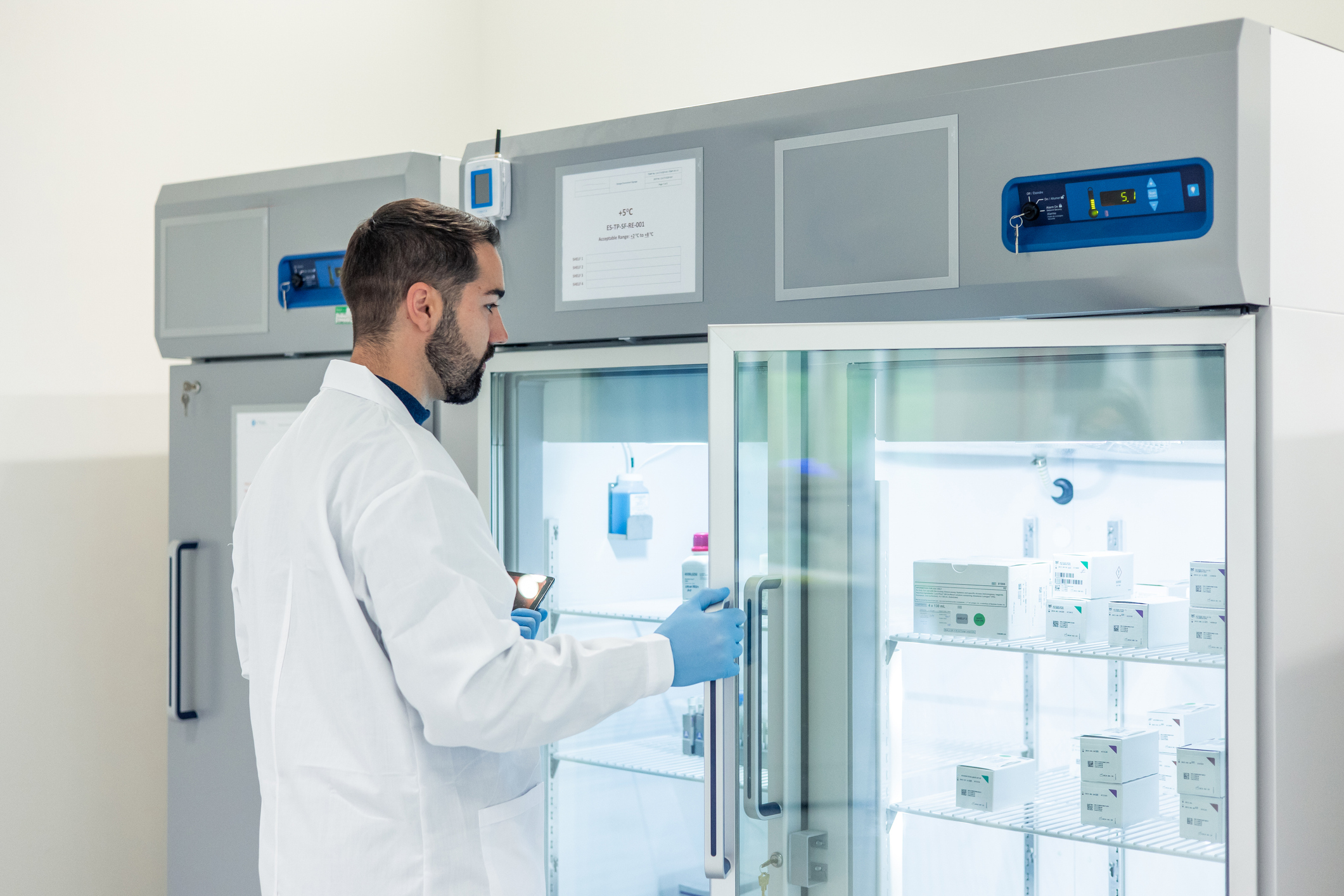
Ultra-low temperature (ULT) freezers present the highest-stakes decision point in most lab moves: transport plugged in and powered or pack in dry ice and unplug. A specialized mover with an onboard-generator trailer can keep a -80°C freezer running continuously throughout transit, preserving sample integrity without a temperature excursion. ULT freezers are among the most energy- and temperature-sensitive pieces of equipment in any lab, which is exactly why continuous power during transport matters more than a fast-and-loose dry ice workaround.
Red flag: A mover who defaults to "we'll just pack it in dry ice" without asking what's inside the freezer, how long the trip takes or whether the samples are irreplaceable.
3. CAUBO Membership for Academic Procurement
The Canadian Universities Administrators and Business Officers association (CAUBO) is a Canada-wide body representing administrative and financial officers at more than 100 universities and affiliated colleges. Armstrong Moving holds this membership and as part of the same company, Armstrong Scientific Transport draws on that same vetted standing within academic procurement circles, which shortens your own internal approval process significantly.
Red flag: A vendor who's unfamiliar with CAUBO entirely or who can't explain how their pricing and contracts align with standard university procurement requirements.
4. Equipment-Specific Experience
Ask for examples of the exact equipment category you're moving, such as mass spectrometers, MRIs, cryogenic storage and analytical balances, not just "scientific equipment" in general. A mover with genuine equipment-specific experience can speak to disassembly sequencing, recalibration risk and manufacturer-specific handling requirements without hesitation.
Red flag: Vague answers like "we've moved all kinds of lab equipment safely" instead of naming the actual instrument categories and the protocols used for each.
5. Chain-of-Custody and Insurance Coverage
Coverage should attach the moment a mover's team first handles your equipment inside the originating lab, not only once it's loaded onto a truck. This is standard practice among specialized lab-equipment insurers and it's a meaningful distinction: gaps in coverage tend to appear exactly at handoff points, which is also where chain-of-custody breaks down most often.
Red flag: An insurance certificate that only covers "in-transit" damage, with no clarity on what happens during loading, staging or unloading.
6. Turnkey Project Management vs Piecemeal Coordination
A turnkey laboratory moving company assigns one project manager who owns the relocation end to end, pre-move surveys, scheduling, vendor coordination and post-move setup. Piecemeal arrangements, where your own staff coordinates separate vendors for packing, transport and reinstallation, multiply the points where something falls through.
Red flag: No single named point of contact or a structure where you're expected to coordinate between multiple subcontractors yourself.
7. Cross-Border Capability
If your relocation crosses the Canada - US border or moves internationally, your mover needs fluency in customs documentation for dangerous goods and regulated biological materials, not just a general freight-forwarding relationship. IATA's Dangerous Goods Regulations classify infectious substances into Category A, capable of causing permanent disability or death in humans or animals and the less severe Category B. Cross-border movement of either category requires documentation your mover should already know how to prepare.
Red flag: A mover who treats cross-border logistics as an afterthought or subcontracts the customs piece to a third party they don't manage directly.
8. Named Institutional References
Ask for references from research institutions of a comparable size and equipment profile to yours, not generic testimonials. A mover with genuine academic relocation experience will name the institution, the scope of the move and offer a contact you can actually call.
Red flag: References limited to marketing quotes or anonymized case studies with no verifiable institution attached.
9. Validated Monitoring and Data Logging
Ask whether temperature-sensitive shipments are logged continuously throughout transit, with recorded data you can attach to your own compliance file, not just a verbal assurance that "everything stayed cold." This is a meaningful differentiator: movers that generate documentation automatically save you from having to reconstruct a compliance record after the fact if a regulator or auditor asks.
Red flag: A mover who can't describe what monitoring equipment they use or how often temperature checks occur during a multi-hour haul.
10. Decommissioning and Reinstallation Scope
Confirm upfront whether disconnection, decommissioning and reinstallation at the destination are included in scope or billed as a separate add-on you'll need to arrange later. A laboratory moving company built for full relocations plans decommissioning and recommissioning as part of the same project, coordinated against the same timeline as the transport itself.
Red flag: A quote that stops at "we'll transport it" with no mention of what happens before disconnection or after delivery.
Choosing With Confidence
Ten points is a lot to hold in your head during a vendor call, which is exactly why this exists as a document you can bring with you. The pattern across all ten is the same: a genuine laboratory moving company answers each question with specifics, including certificate numbers, named equipment and a documented process, while a generalist mover answers in adjectives.
If you're evaluating quotes right now and something on this list hasn't come up yet, that's worth raising before you sign. A relocation that goes wrong on compliance or cold-chain grounds costs far more to fix than it would have cost to ask the right question up front.
Speak to a Lab Relocation Specialist to walk through your equipment list, timeline and compliance requirements before you commit to a mover.
FAQ
1. What questions should I ask a lab mover?
Start with certifications: ask for their TDG training certificate numbers and renewal dates and whether they hold IATA dangerous-goods classification competency for any biological or chemical materials in your inventory. Follow up with equipment-specific questions: have they moved your exact instrument category before and can they name a comparable institutional reference?
2. What certifications matter?
TDG certification is required for anyone handling dangerous goods within Canada and IATA Dangerous Goods Regulations training matters for any shipment crossing borders by air. If your institution has GDP or GxP compliance obligations, ask whether the mover's documentation practices are built to support your own audit trail.
3. How long does lab-mover onboarding take?
Onboarding timelines vary by institution and equipment complexity, but a turnkey mover typically starts with a pre-move survey to scope equipment, timelines and any regulated materials before scheduling begins. Building in time for this survey step, rather than skipping straight to a moving date, is what prevents surprises later in the process.
4. How do I compare lab-relocation quotes?
Compare scope before you compare price. Confirm whether decommissioning, reinstallation, insurance coverage and project management are included or billed separately across each quote. A lower number that excludes chain-of-custody documentation or cold-chain monitoring isn't actually the lower-cost option once you account for what it leaves out.
5. Is dry ice or plug-in transport better for ULT freezers?
Plug-in transport on a generator-equipped trailer keeps a ULT freezer at a continuous set temperature throughout the move, which avoids the temperature fluctuation risk that comes with unplugging and repacking in dry ice. Dry ice can work for shorter moves or specific sample types, but it requires careful handling and monitoring since dry ice itself is a regulated dangerous good under both TDG and IATA rules.